

EVENT DETAILS
The Center for Women’s History is pleased to present the fourth annual Diane and Adam E. Max Conference on Women’s History, the cornerstone of the Center’s suite of public and scholarly programs. This year, the conference explores the history of Prohibition 100 years after the ratification of the 18th Amendment, which banned the sale and consumption of alcohol in the United States.
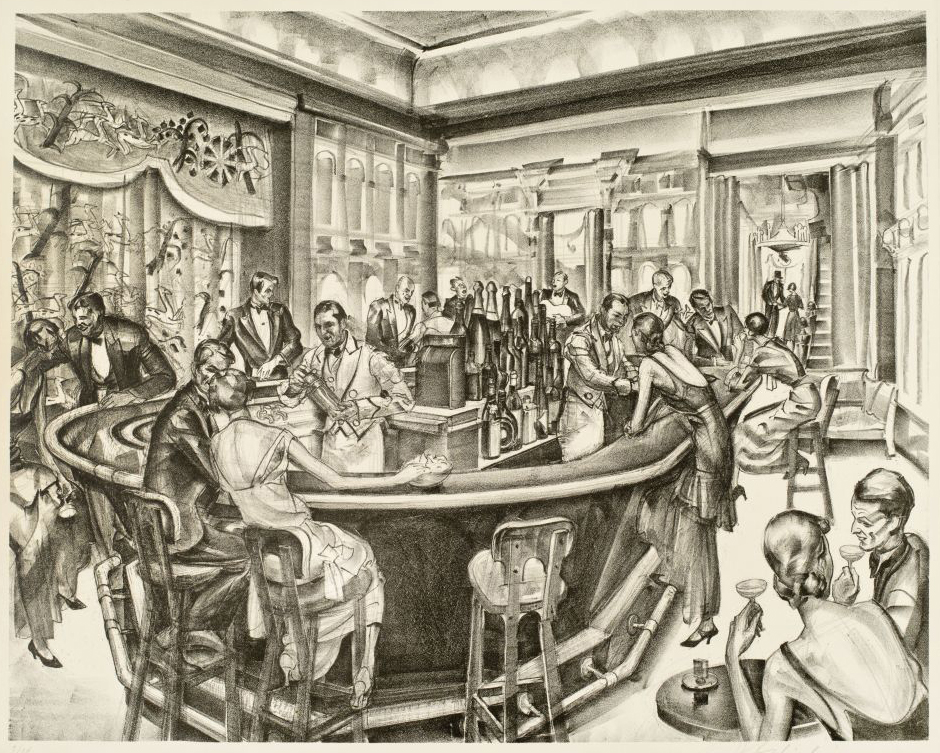
Prohibition began on January 20, 1920. For some women and men, this represented the culmination of decades of struggle for temperance, a movement that promised to protect women and families from alcoholism. Many others challenged the new laws, particularly in New York City, where the patrons of speakeasies and ballrooms not only ignored Prohibition, but also transgressed boundaries of gender, race, and sexuality. The Roaring Twenties also witnessed the dramatic growth of law enforcement, as efforts to control the consumption of alcohol led to new kinds of urban policing which themselves generated new forms of inequality. One thing was for certain—by the time Prohibition was repealed in 1933, it had transformed the nation.
CONFERENCE SCHEDULE
2 PM WELCOME
2:05 PM KEYNOTE ADDRESS
Senator Liz Krueger, Chair of the Senate Finance Committee, New York State Senate
2:30 PM BREAK
2:45 PM PANEL DISCUSSION
Enforcing the Law: The effort to enforce prohibition generated new kinds of policing and surveillance and new forms of vigilante justice. This panel will consider the emergence of these new forms of law enforcement, and their relationship to mass incarceration and policing in our own time. Panelists will discuss law, politics, and organizing today.
Cheryl Hicks, University of Delaware, author of Talk with You Like a Woman: African American Women, Justice, and Reform in New York, 1890-1935
Linda Gordon, NYU, author of The Second Coming of the KKK: The Ku Klux Klan of the 1920s and the American Political Tradition
Andrea J. Ritchie, attorney and activist, author of Invisible No More: Police Violence Against Black Women and Women of Color
Moderator: Irin Carmon, Journalist, Washington Post, MSNBC, and author of The Notorious RBG
3:45 PM BREAK
4:00 PM PANEL DISCUSSION
Last Call: Reflections on the History of Prohibition: Lisa McGirr and Daniel Okrent will reflect on the day’s presentations in the context of their own work, considering how the study of Prohibition informs our understanding of women’s history and American history writ large.
Daniel Okrent, author of Last Call: The Rise and Fall of Prohibition
Lisa McGirr, Harvard University, author of The War on Alcohol: Prohibition and the Rise of the American State
Moderator: Nick Juravich, Andrew W. Mellon Foundation Postdoctoral Fellow in Women's History, New-York Historical Society
4:45 PM
Closing Remarks
Valerie Paley, Senior Vice President, Senior Chief Historian and Director, Center for Women’s History, New-York Historical Society
LOCATION
The Robert H. Smith Auditorium at the New-York Historical Society, 170 Central Park West, New York, NY 10024
RESERVING TICKETS
Admission is free; advance reservations are required to guarantee seating.
Please note that there are separate registrations for the morning and afternoon sessions. Please reserve a ticket to both the morning and afternoon sessions if you plan on attending the entire conference.
By phone: Please contact New-York Historical’s in-house call center at (212) 485-9268. Call center is open 9 am–5 pm daily.
Online: Click on the orange “Reserve Now” button at the top of this page.
In person: Advance tickets may be reserved on site at New-York Historical’s Admissions desk during museum hours.
Programs and dates may be subject to change. Management reserves the right to refuse admission to latecomers.
Major funding for the programming of the Center for Women’s History provided by Joyce B. Cowin; Diane and Adam E. Max; The Andrew W. Mellon Foundation; Jean Margo Reid; The Estate of Jean Dubinsky Appleton; Eric J. and Daria L. Wallach; Diana and Joseph DiMenna; the Robert and Mercedes Eichholz Foundation; Deutsche Bank; Claudine and Fred Bacher; James Basker and Angela Vallot; Leah and Michael R. Weisberg; and an anonymous donor.
Image: Joseph Golinken, Speakeasy, 1920s. Lithograph. New-York Historical Society Library.